
Views: 0 Author: Site Editor Publish Time: 2026-03-26 Origin: Site


The casting of stainless steel sculpture represents a specialized intersection of fine art and industrial metallurgy. Unlike fabrication methods that form metal from sheet or plate, casting involves pouring molten stainless steel into a prepared mold, allowing the creation of forms that would be impossible or prohibitively complex to achieve through forging or welding alone. This process enables sculptors to realize highly detailed, complex geometries with uniform material properties throughout the structure. The technical demands of stainless steel casting are substantial. The material’s high melting point, shrinkage characteristics, and fluidity requirements distinguish it from more commonly cast metals such as bronze. This article examines the casting processes used for stainless steel sculpture, the material specifications that govern successful pours, and the technical considerations that ensure finished works meet both aesthetic and structural requirements. Quyang Zhihong Landscape Engineering Co., Ltd. operates within this technical field, providing expertise in the casting and finishing of stainless steel sculptural works.
Cast stainless steel sculpture is distinguished from fabricated sculpture by its production method. In casting, the artist’s original form—whether modeled in clay, carved in wax, or designed in digital software—is reproduced by creating a mold into which molten stainless steel is poured. The metal solidifies within the mold, taking the exact shape of the original, including fine surface details and complex undercuts that would be difficult or impossible to create through sheet metal fabrication. The casting method offers distinct advantages for certain sculptural forms. Figurative works with intricate anatomical detail, ornamental pieces with complex surface textures, and sculptures requiring hollow forms with uniform wall thickness are well-suited to the casting process. Additionally, casting allows for the production of multiple identical sculptures from a single original model, making it the preferred method for limited editions and commissioned works where consistency across multiple copies is required. The material properties of cast stainless steel differ in some respects from wrought stainless steel used in fabrication. Cast grades are designated differently, with the American Iron and Steel Institute (AISI) using casting-specific designations such as CF8 for the cast equivalent of 304 stainless steel and CF8M for the cast equivalent of 316. These cast grades are formulated with slightly adjusted compositions to optimize fluidity during pouring and to achieve the desired mechanical properties after solidification.
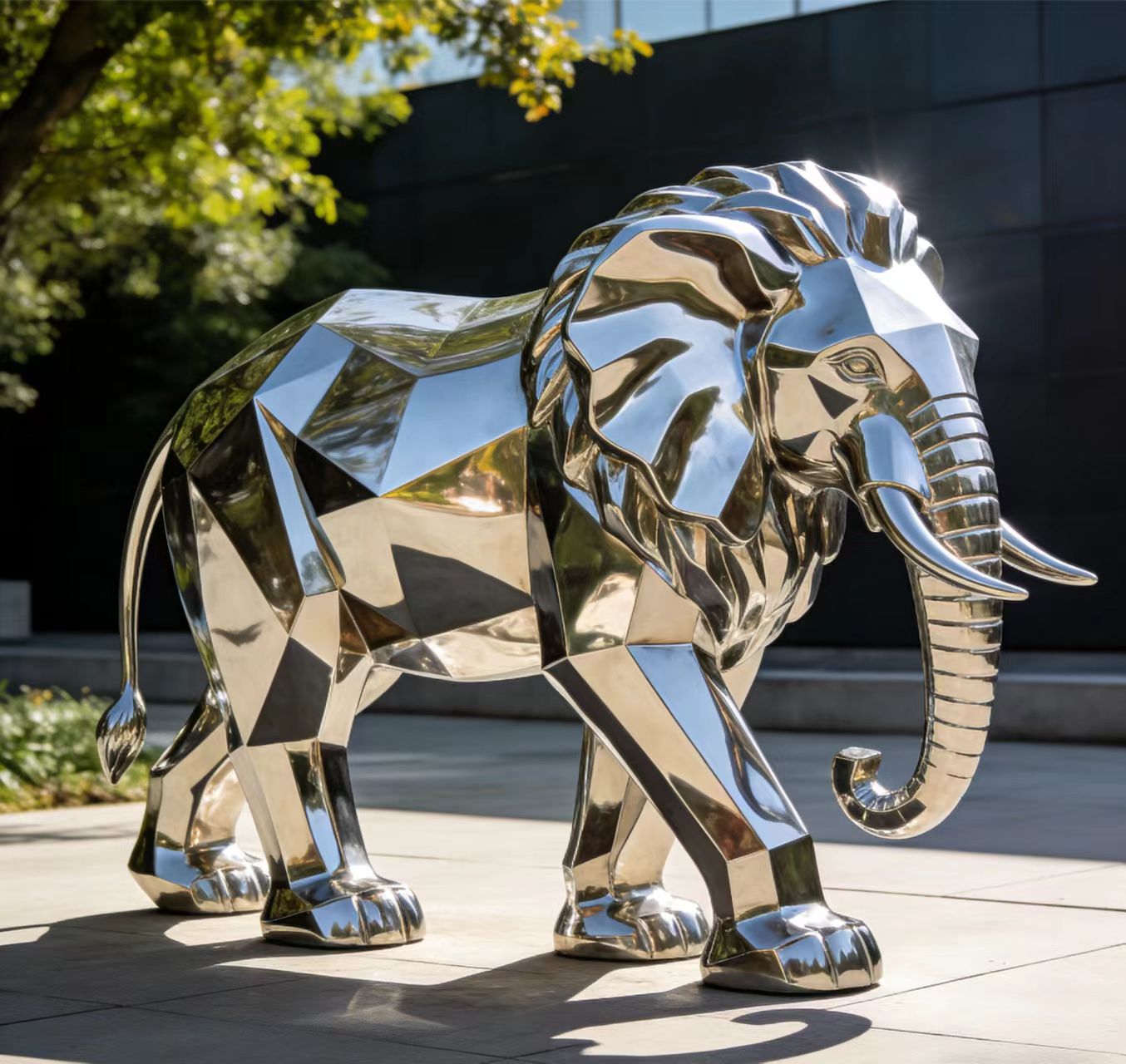
Several casting processes are employed for stainless steel sculpture, each with distinct capabilities, limitations, and applications. The choice of process depends on the sculpture’s size, complexity, quantity, and required surface finish.
The lost-wax casting process, also known as investment casting, is the predominant method for stainless steel sculpture production, particularly for works requiring fine detail and complex geometry . The process has origins extending back over five thousand years, though modern implementations incorporate advanced materials and precise temperature control. The lost-wax process begins with the creation of a pattern that replicates the desired sculpture. Traditionally, sculptors create this pattern in wax, modeling directly to capture surface textures and details. In contemporary practice, patterns may also be created through 3D printing of resin or PLA materials, which can be burned out similarly to wax . The pattern is attached to a gating system—a network of wax channels that will guide molten metal into the mold cavity. The entire assembly is then coated with multiple layers of ceramic slurry and fine refractory material. This ceramic shell is built up layer by layer to achieve sufficient thickness to withstand the pressure of poured metal. For stainless steel casting, the ceramic shell must be formulated to withstand the high pouring temperatures without cracking or reacting with the molten metal. Once the ceramic shell has dried and cured, the assembly is placed in a furnace in an inverted position. The heat, typically ranging from 900 to 1100 degrees Celsius, melts the wax pattern, which flows out through the gating system—hence the term “lost-wax.” The remaining ceramic shell forms a hollow mold with an internal cavity exactly matching the original pattern. The ceramic shell is then fired at high temperatures to eliminate any residual wax or moisture and to strengthen the mold for metal pouring. Molten stainless steel, heated to approximately 1400 to 1500 degrees Celsius depending on the specific alloy, is poured into the preheated mold . After the metal has cooled and solidified, the ceramic shell is broken away, revealing the cast stainless steel sculpture with the gating system attached. The final stage involves cutting away the gating system, grinding the attachment points smooth, and performing surface finishing work. For stainless steel sculptures requiring mirror or brushed finishes, this post-casting finishing can require extensive hand labor, with polishing times ranging from 40 to 80 hours per square meter depending on the desired surface quality.
Silica sol casting is a variant of investment casting that has become widely adopted for stainless steel sculpture components, particularly in industrial production settings. This method uses a silica sol binder in the ceramic shell formulation, producing molds with high dimensional accuracy and smooth surface finishes . The silica sol process offers specific advantages for stainless steel casting. The resulting ceramic shell has excellent high-temperature strength and chemical stability, minimizing reactions between the mold and the molten stainless steel that could create surface defects. The process achieves dimensional accuracy capable of reaching International Tolerance (IT) grade 4, with surface roughness values of Ra 6.3 micrometers or better in the as-cast condition . For sculpture applications, silica sol investment casting is particularly suitable for smaller to medium-sized works and for components that will be assembled into larger sculptures. The process is economically viable for both single-piece production and limited editions, with no minimum batch size requirements . However, the method has practical limitations for very large sculptures, with individual casting weights typically not exceeding 60 kilograms for the silica sol process .
Lost-foam casting offers an alternative method for larger stainless steel sculptures and components. In this process, a foam pattern—typically expanded polystyrene—is created to match the desired sculpture’s geometry. The foam pattern is coated with a refractory material and embedded in unbonded sand contained within a flask. When molten stainless steel is poured directly onto the foam pattern, the heat vaporizes the foam, and the metal fills the cavity left behind. This process eliminates the need for pattern removal prior to pouring and allows for complex geometries that might be difficult to achieve with conventional investment casting . Lost-foam casting achieves dimensional tolerances of ±0.1 to 0.3 millimeters and surface finishes of Rz 25 to 50 micrometers, making it suitable for sculptures where high detail is required but where the ultimate surface finish will be achieved through post-casting grinding and polishing . The process is particularly well-suited for larger sculptures and for forms with consistent wall thicknesses, as the foam pattern can be precisely engineered to achieve uniform section thickness throughout the work.
The selection of stainless steel alloy for cast sculpture significantly affects both the casting process and the finished work’s performance. Different alloys offer varying combinations of corrosion resistance, fluidity, strength, and cost.
CF8 is the casting equivalent of 304 wrought stainless steel, containing approximately 18% chromium and 8% nickel. This alloy offers good corrosion resistance for most indoor and protected outdoor applications. Its fluidity during pouring is adequate for detailed castings, and the material responds well to polishing and finishing. For sculptures installed in urban environments away from direct coastal exposure, CF8 provides an appropriate balance of corrosion resistance and cost. The material performs well in atmospheric conditions with typical industrial or automotive pollutants, maintaining its appearance with routine cleaning.
CF8M, the casting equivalent of 316 stainless steel, incorporates molybdenum in addition to chromium and nickel. This addition enhances resistance to pitting and crevice corrosion in chloride-rich environments, making CF8M the standard for sculptures installed in coastal locations or areas subject to de-icing salt exposure . The molybdenum content also improves the alloy’s mechanical properties at elevated temperatures, which can be advantageous for sculptures that will experience significant solar heating. For works requiring the highest level of corrosion resistance, particularly in marine environments, CF8M is the appropriate specification.
Research has demonstrated that the composition of stainless steel used for casting can be modified to improve casting quality and aesthetic outcomes. One study examining stainless steel 18-8 (equivalent to 304) fine art casting found that increasing the silicon content from 0.75% to 1.5% improved fluidity during pouring and reduced the occurrence of casting defects such as pits, pinholes, porosity, non-fill, and cold lap . The improved fluidity from increased silicon content allows molten metal to flow more completely into detailed mold cavities, reducing the need for post-casting repair work. This effect decreases the labor required for welding, grinding, and polishing of finished sculptures, contributing to more efficient production and more consistent surface quality .
The successful production of cast stainless steel sculpture requires attention to technical parameters throughout the design, casting, and finishing phases.
Cast stainless steel sculptures must be engineered to withstand the loads they will encounter during their service life. For sculptures installed outdoors, wind loading and seismic forces are primary considerations. Industry practice recommends that sculptures exceeding five meters in height undergo wind tunnel simulation testing or detailed finite element analysis to verify structural stability . The wall thickness of cast stainless steel sculptures must balance structural requirements against weight and cost considerations. Typical wall thicknesses range from 3 to 8 millimeters for most cast works, with thicker sections specified for structural elements and load-bearing points . For hollow cast forms, uniform wall thickness is essential to prevent differential cooling rates that can cause distortion or internal stresses. For large cast sculptures or those with cantilevered elements, internal reinforcement may be required. Carbon steel armatures integrated within cast stainless steel sections can provide additional strength while maintaining the aesthetic appearance of stainless steel on visible surfaces. When dissimilar metals are used together, proper isolation is required to prevent galvanic corrosion.
Stainless steel expands and contracts with temperature changes at a rate of approximately 17 micrometers per meter per degree Celsius. For large sculptures, cumulative thermal expansion across the structure can be significant. A ten-meter tall sculpture experiencing a temperature change of 50 degrees Celsius will undergo approximately 8.5 millimeters of linear expansion. To accommodate this movement without inducing stress or distortion, connection points in cast stainless steel sculptures may incorporate sliding supports or expansion joints. These design features allow the sculpture to expand and contract with temperature changes while maintaining structural integrity and alignment .
Large cast stainless steel sculptures are typically produced in multiple sections that are assembled through welding. The selection of appropriate filler metals and welding procedures is essential for maintaining corrosion resistance and appearance. For welding cast stainless steel sections, filler metals must match the base material’s composition to ensure consistent corrosion resistance. For CF8M castings, 316L or 309L filler metals are typically specified. Welding procedures must control heat input to prevent distortion and to maintain the corrosion resistance of the heat-affected zone. Interlayer temperatures during multi-pass welding are typically controlled below 150 degrees Celsius to prevent sensitization and carbide precipitation . Post-weld finishing restores the surface appearance and corrosion resistance. Heat tint from welding must be removed through mechanical abrasion or chemical pickling. For sculptures requiring uniform surface finishes, welds are ground flush and blended with the surrounding surface, making the joint visually indistinguishable from the cast material.
The surface finish of cast stainless steel sculpture is a critical factor in its final appearance. Casting processes leave surfaces with varying degrees of roughness that require post-casting finishing to achieve the desired aesthetic.
After removal of the gating system and rough grinding of attachment points, cast stainless steel sculptures undergo progressive smoothing. This process begins with coarse abrasives to remove surface irregularities and progresses through increasingly fine grits to achieve the required smoothness. For sculptures with complex geometries or detailed surface textures, finishing must be carefully controlled to preserve the artist’s intended forms. Abrasive tools of varying shapes and sizes allow finishers to access recessed areas and maintain consistent surface quality across the entire work.
Mirror polishing of cast stainless steel requires extensive hand labor and specialized techniques. Polishers progress through a sequence of abrasive grits from coarse to fine, typically reaching #1500 mesh or finer before final buffing . Each successive grit removes scratches left by the previous grit, gradually building a reflective surface. For mirror finishes on cast stainless steel, electrolytic polishing may be employed as a final step. This electrochemical process removes a thin layer of metal from the surface, eliminating microscopic irregularities and producing a highly reflective finish without the mechanical stresses associated with abrasive polishing . Electrolytic polishing also enhances corrosion resistance by removing surface contaminants and promoting the formation of a uniform passive layer. For brushed finishes, directional abrasives create linear grain patterns that reflect light in controlled ways. Brushed finishes are often specified for large-scale public sculptures where mirror finishes might create distracting reflections or where maintenance considerations favor less reflective surfaces .
Quality control for cast stainless steel sculpture includes verification of surface finish and corrosion resistance. For works requiring high-reflective finishes, surface roughness is measured using profilometers to confirm that finishes meet specifications. For mirror-polished surfaces, roughness values below Ra 0.01 micrometers are achievable . Corrosion resistance verification may include testing of the passive layer after finishing. The blue dot test, which involves applying a solution to the surface to detect free iron contamination, is used to confirm that the passivation layer is intact and that no embedded iron particles remain from grinding or finishing operations .
Understanding the distinctions between cast and fabricated stainless steel sculpture helps artists and commissioners select appropriate production methods for their projects. Cast stainless steel sculpture offers superior capability for reproducing fine detail and complex geometry. The mold captures surface textures, undercuts, and intricate forms that would be difficult or impossible to achieve through sheet metal fabrication. This makes casting the preferred method for figurative sculpture, ornamental works, and any design requiring precise reproduction of complex forms . Fabricated sculpture, produced by cutting, forming, and welding sheet or plate stainless steel, offers advantages for large-scale works with simple geometries. Fabrication typically requires lower tooling costs than casting and can be more efficient for sculptures where the design consists of planar surfaces or simple curves . Combined approaches are also common. Some sculptures incorporate cast components for detailed sections—such as figurative heads, hands, or ornamental elements—combined with fabricated structures for larger, simpler volumes. This hybrid approach leverages the strengths of each method while managing cost and production complexity .
The production of cast stainless steel sculpture requires specialized facilities and technical expertise that typically exceed what individual artists can maintain in studio settings. Specialized foundries provide the equipment, materials, and skilled personnel necessary for successful casting. Quyang Zhihong Landscape Engineering Co., Ltd. operates within this specialized field, offering capabilities in pattern making, mold preparation, metal pouring, and surface finishing. The company’s experience with cast stainless steel sculpture encompasses works ranging from small-scale figurative pieces to large-scale public art installations. The relationship between sculptor and foundry typically involves collaboration throughout the production process. Pattern creation may involve translating the artist’s original model into a form suitable for mold making. For works requiring digital design or 3D printing, the foundry may provide scanning, modeling, and printing services that facilitate the casting process . Throughout finishing, foundry personnel work to achieve surface qualities that realize the artist’s aesthetic intent.
Casting stainless steel sculpture represents a technically demanding but artistically rewarding approach to metal art. The processes involved—from pattern making through mold preparation, metal pouring, and surface finishing—require specialized knowledge and precise execution to achieve successful results. The material properties of cast stainless steel, including its corrosion resistance, strength, and ability to accept high-quality surface finishes, make it suitable for permanent installation in both indoor and outdoor settings. The technical requirements for successful casting, including alloy selection, mold design, pouring temperature control, and finishing protocols, must be carefully managed to produce works that meet both aesthetic and structural expectations. As the field continues to evolve, advances in pattern-making technology, including 3D printing and digital modeling, are expanding the possibilities for cast stainless steel sculpture. These technologies enable the production of forms that would be difficult or impossible to achieve through traditional pattern-making methods, while maintaining the material benefits that make stainless steel a preferred medium for permanent sculpture. For artists, architects, and commissioners considering cast stainless steel sculpture, collaboration with experienced foundries provides access to the technical expertise and specialized facilities necessary for successful project execution. The combination of artistic vision with technical precision produces works that maintain their intended appearance and structural integrity across decades of public engagement.


